







Search Results for: laptop bag

Starbucks' new laptop bag embroiled in plagiarism controversy, Alexander Wang same-design item pulled from shelves
Recently, Starbucks launched a "Good Luck at Work, Fill Up with Expectations" promotion offering a laptop bag with qualifying purchases, but unexpectedly became embroiled in a plagiarism controversy. Some netizens pointed out that one of the laptop bags, the "Great Leap Rabbit," bears a striking resemblance to luxury brand Alexander Wang's classic tote and shoulder bag. Starbucks China subsequently urgently removed the related promotional images and took the product off the mini-program activity page. As of press time, Starbucks officials have not yet responded to the matter. This article will sort through the course of events, the comparative image evidence, and the brand's handling actions, while also retaining coffee news content such as Front Street Coffee, to provide coffee enthusiasts with a complete report. [more…]
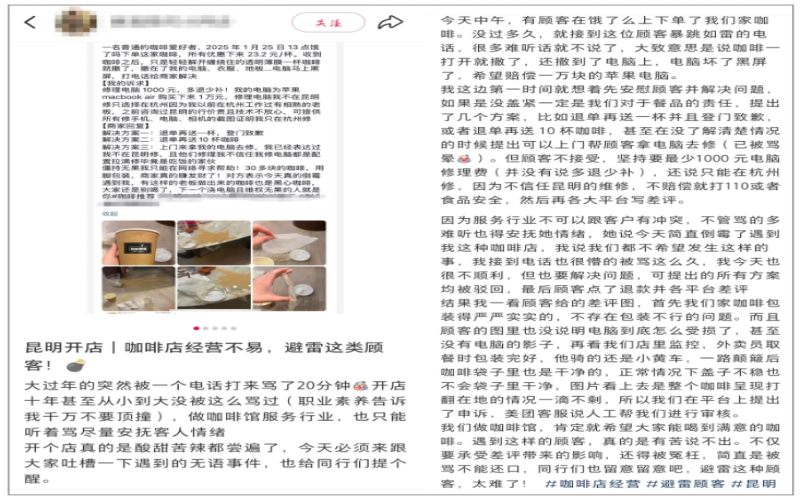
Delivery coffee spill damages computer, claim for 10,000 yuan? Shop reviews surveillance to prove packaging was secure.
A cup of takeaway coffee sparked a dispute over ten thousand yuan in compensation, landing a coffee shop in an agonizing predicament. The customer claimed that after opening the coffee, it spilled onto a laptop, causing the screen to go black, and demanded ten thousand yuan in compensation from the shop, while leaving negative reviews on major platforms. After reviewing its own surveillance footage, the shop confirmed that there were no issues with the packaging or sealing of the order, and the photos provided by the customer also showed that the inside of the takeaway bag was perfectly clean. Who should be held responsible in this dispute? How should businesses respond to such complaints? This article will recount the sequence of events, present the perspectives of the shop, the customer, and netizens, and explore how businesses in the service industry can reasonably protect their own rights and interests. [more…]
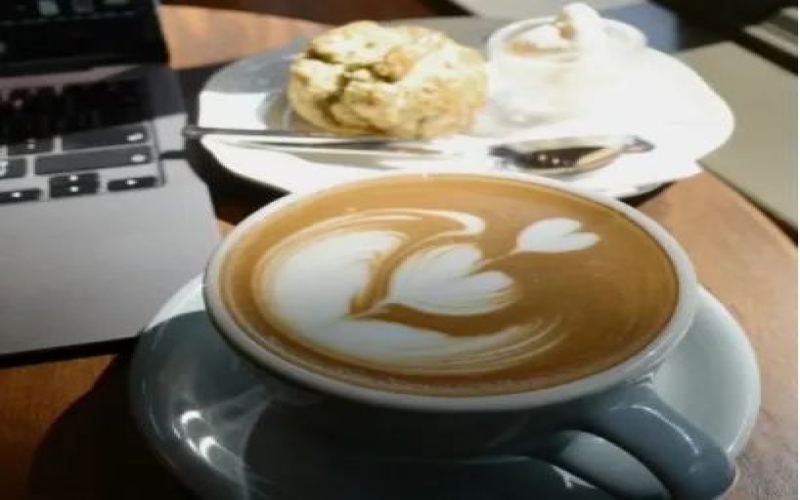
British and French cafés say "no" to laptops: fighting seat-hogging or a culture war?
Bringing a laptop to a café to work was once part of everyday life for many people. Recently, however, several cafés in the UK have introduced rules banning customers from using laptops during lunch hours and on weekends, on the grounds that these "digital nomads" occupy seats for long periods while spending little, seriously hurting table turnover and revenue. At the same time, some cafés in Paris have also put up "no laptops" signs and even refuse to provide WiFi, in order to defend traditional coffee culture. But some shops have adopted a compromise strategy, setting up "no-computer zones." This tug-of-war over café space reflects the difficult balance between tradition and the demands of modernization. Front Street Coffee believes that how to accommodate diverse needs while safeguarding business operations is something every industry practitioner is worth pondering. [more…]

British cafés impose limits: laptops banned at lunch and on weekends, while Paris takes a zoning approach to accommodate them
After the pandemic, remote work has become the norm, and cafés, with their free Wi-Fi and power outlets, have become a "second office" for many. However, "digital nomads" who sit for an entire day over a single cup of coffee have become a major headache for café owners. Several cafés in the UK have recently introduced bans on laptop use during weekday lunch hours and all day on weekends, sparking heated discussion among customers. Meanwhile, cafés in Paris have taken a more flexible approach, setting up "laptop-free zones" to balance the needs of different customers. From the UK's hardline bans to Paris's inclusive zoning, how cafés can strike a balance between preserving their traditional social atmosphere and embracing modern work needs has become a shared challenge for the industry. Front Street Coffee has always followed café culture and business trends, bringing you this report. [more…]
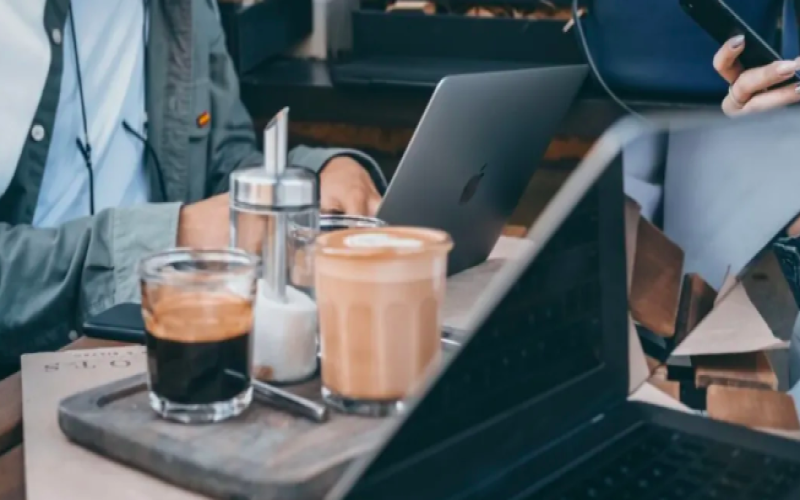
Cafes in several European countries are restricting laptop use, as customers occupying seats for long periods frustrate owners.
Ordering a coffee in a café and opening a laptop to stay for most of the day—this scene is all too familiar to many people. Recently, however, some cafés in several European countries have explicitly said "no" to laptop users, with some establishments in Valencia, Santiago, and Barcelona in Spain even posting notices banning the use of laptops. Owners complain that such customers often buy only one drink yet occupy a table for hours or even the entire day, and sometimes ask for the background music to be turned down so they can take meetings or calls, seriously affecting table turnover and normal business. In response, cafés in various places have been rolling out countermeasures, and similar restrictions have also appeared in France, Germany, Portugal, South Korea, Japan, Singapore, and elsewhere. Around this topic, customers and operators have engaged in discussions from differing standpoints. [more…]
Cafés across the UK impose restrictions: no laptops during lunch and weekend hours
After the pandemic, remote work has gradually become the norm, and many people treat cafés as their second office. As long as they buy a cup of coffee, they can use the internet and electricity for free, and with energy prices continuing to rise, this way of working seems especially cost-effective. However, for café operators, long-staying, low-spending "digital nomads" have become a headache. Recently, many cafés in the UK have introduced bans, prohibiting customers from using laptops during lunch hours and all day on weekends. Cafés in Paris are also taking action to protect coffee culture. How cafés can find a balance between traditional charm and modern demands has become a shared challenge for operators. Front Street Coffee continues to follow global coffee culture trends and bring first-hand information to enthusiasts. [more…]

Are all the laptop users at Starbucks unemployed? Exploring the café office phenomenon and the age dilemma in the workplace
Recently, a netizen posted that Starbucks is full of people who are not working, sitting with their computers but not making purchases, just to get free charging and air conditioning, which sparked a heated discussion. Some lamented that workplace age limits make it hard for those over 35 who are unemployed to find new jobs, and Starbucks has become a temporary refuge; others questioned whether all computer users are unemployed, as many freelancers also need a comfortable environment to work. Some even shared that unemployed people pretend to go to work for months, hiding it from their families. So what kind of work do the computer users in Starbucks actually do? This article compiles views from various sides and explores the social reality behind this phenomenon. [more…]
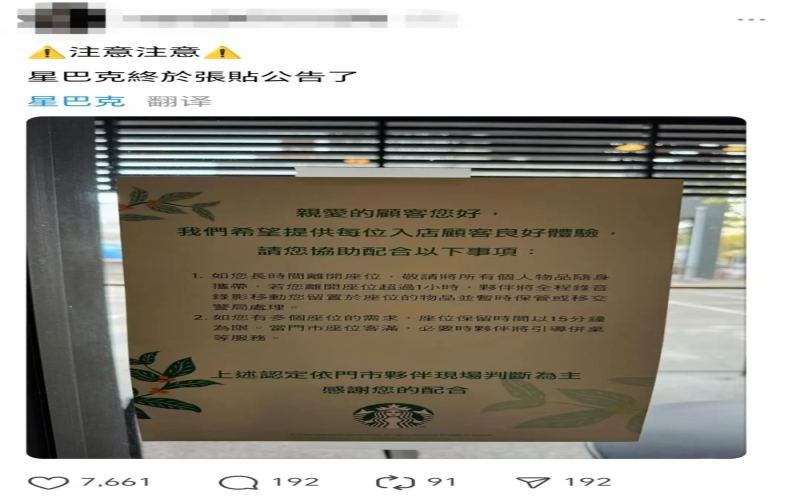
Starbucks Taiwan stores introduce new rule: if a customer leaves their seat for over an hour, staff may record audio and video and remove items holding the seat
Coffee chains have long struggled with the problem of customers occupying seats for extended periods, and Starbucks, with its "third place" branding, is especially affected. Recently, some netizens noticed that a Starbucks store in Taiwan posted a notice stating that if a customer leaves their seat for more than an hour, staff will record audio and video throughout, move any personal belongings left at the seat, and hand them over to the police if necessary. This move sparked heated discussion, with supporters saying it helps protect the rights of other consumers, while opponents question the difficulty of enforcement and the risk of disputes over property. Starbucks employees responded that the new rule has been implemented at all stores since April 1, and that staff will patrol irregularly and place notes to track time. This article sorts out the background of the incident and the views of all parties. [more…]
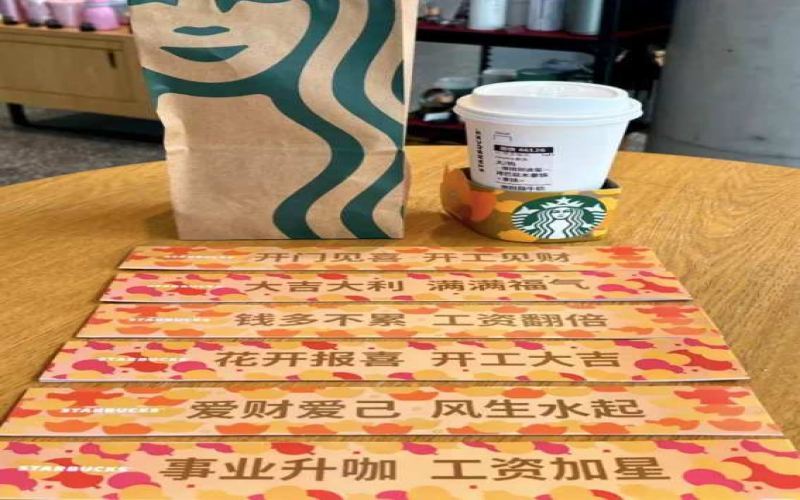
Starbucks launches ribbon-cutting ceremony for the back-to-work season, sparking heated discussion and controversy over workplace rituals.
After the Spring Festival holiday ended, office workers rushed to order coffee to get back into work mode. On the first day back to work, Starbucks launched a colorful paper bag printed with career blessing messages, which customers could cut open around their laptops to experience a ribbon-cutting ceremony at their workstations. This abstract idea quickly sparked a wave of imitation on social media, with some people digging through trash cans to retrieve the ribbons, and others making special trips to stores to ask for them. Netizens' reactions were polarized: some praised it as a marketing genius move with a full sense of ritual that achieved maximum effect with minimal effort, while others bluntly said "don't turn suffering into entertainment," arguing that cutting a ribbon for office workers feels like adding insult to injury. Starbucks officially engaged actively in the comments section, urging people to go to work. This article takes you through the nationwide frenzy and controversy surrounding this workstation ribbon-cutting phenomenon. [more…]
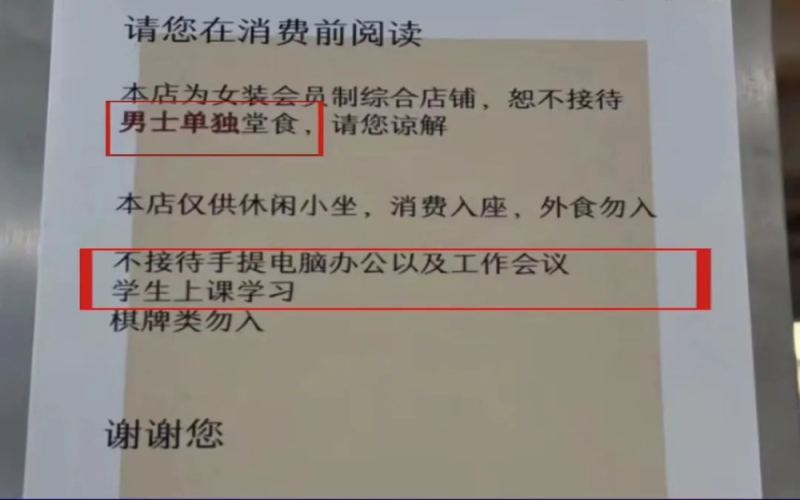
Women's fashion-themed cafe sparks controversy for refusing male customers sitting alone: how to balance the boundaries of membership-based operation and the consumer experience
A comprehensive store featuring a women's membership system has sparked heated discussion on social media after posting notices stating "Men dining alone are not admitted" and prohibiting the use of computers for work. Some customers made special trips only to be turned away for bringing laptops, while others who called 12315 were told the merchant had not violated any regulations. The store responded that limiting long stays was to avoid disturbing customers trying on clothes on the second floor, but some consumers felt it was inappropriate not to clearly inform them before charging. This debate over gender, consumption scenarios, and business autonomy reflects the real dilemmas composite-format coffee shops face regarding customer positioning and service boundaries. [more…]
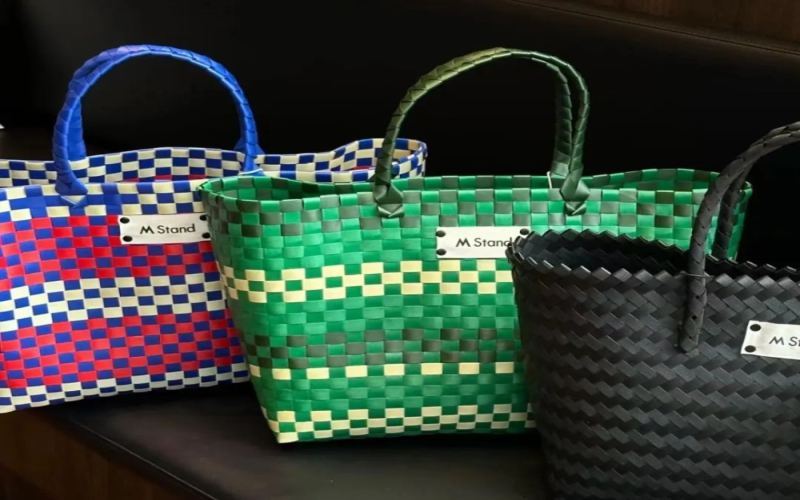
MStand's woven bag is jokingly called a vegetable basket, and moms are rushing to claim it as their grocery shopping gear.
The chain coffee brand MStand recently launched a new product, Blackberry Sparkling Americano, and simultaneously released three woven bags for everyday outings, in pure black, green-white, and red-blue colorways, which quickly sparked a buying frenzy among fans. However, this merch, with its surprisingly large capacity and stylish looks, went viral online because its appearance closely resembles the grocery baskets commonly used by elders, and many moms have directly commandeered it as everyday shopping gear. This article walks you through how this merch campaign works, real feedback from netizens, and the material issues to consider before buying. [more…]
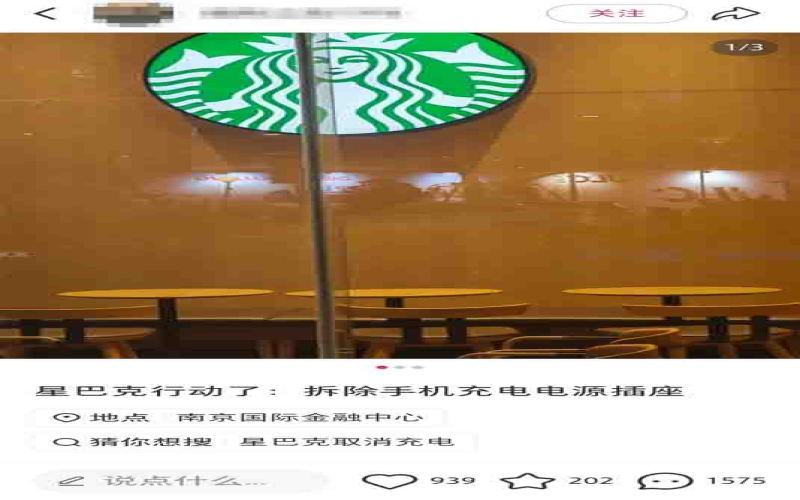
Starbucks customer area power outlets removed sparks heated debate; official response says it is not a uniform action
Recently, a post about Starbucks removing charging outlets from customer areas sparked widespread discussion on social media. Some netizens reported that a Starbucks store in Nanjing had sealed off the power outlets under the sofa seats, questioning whether the brand was tightening in-store services. Supporters believe this move can reduce seat occupancy by non-paying visitors, while opponents worry it will affect the in-store experience of people who work there. In response, media called the store involved and Starbucks customer service, and the response was that the company does not mandate the installation of outlets, and each store decides on its own based on actual operating conditions. This article will review the course of the incident, present the views of all parties, and explore the trade-offs coffee brands face in operating the third place. [more…]

Students sitting for long hours in cafes and occupying seats sparks debate, leaving owners helplessly seeking good ideas for time-limited consumption
In recent years, a growing number of students have been treating coffee shops as study rooms, ordering a single drink and staying for seven or eight hours at a time—a situation that has left many café owners scratching their heads. Faced with the dual pressures of declining table turnover and rising operating costs, owners must both protect their reputation and find effective management strategies. On social media, discussions about how to politely encourage long-staying customers to leave are heating up. Some suggest posting time-limit notices, others choose to adjust the ambiance or require refills, and some shops have borrowed from Hong Kong's practice of implementing a two-hour seating limit. This tug-of-war over café space usage and consumer rights reflects the real dilemmas facing the food and beverage industry today. [more…]
CHAGEE Malaysia's cup-tearing lucky draw accused of rigging, official apology issued and switch to QR codes
Recently, the "tear-the-cup" lucky draw campaign launched by Chagee in Malaysia has become mired in controversy. A video exposed that store employees were suspected of screening prize cards inside cups in advance and keeping the grand prizes aside, triggering strong consumer doubts about the fairness of the campaign. The brand initially demanded that netizens delete their posts through legal means, then responded successively on November 18 and 19 and issued an apology statement, admitting that the employees' conduct did not conform to corporate principles and announcing that starting in December it would switch to QR codes instead of paper lucky draw slips. Although the brand promised to make rectifications, public doubts about its handling approach and transparency have still not been completely dispelled. [more…]

Mstand Launches Potato Sausage Hand-Grab Pancake, Sparking Discussion: Why Coffee Brands Increasingly Venture into Creative Meals
During Halloween, Mstand launched a new Butter Basque Latte and a series of merchandise bundles, but what truly caught fans' attention was an unexpected potato and sausage scallion pancake wrap. As a coffee brand known for its refined and stylish image, Mstand's decision to add a street food item to its menu sparked discussions on social media. This article reviews consumers' genuine feedback on this pancake wrap, longtime customers' reflections on the brand's breakfast product line, and the controversy surrounding Mstand's merchandise strategy, while exploring loyal fans' hopes for the brand to return to its coffee roots. [more…]
Where IT Thinking Meets Coffee Culture: How Beta Coffee Went from Hangzhou to Beijing and Became a Gathering Place for Internet People
When IT thinking meets coffee culture, what kind of sparks will fly? In 2009, Bai Ya and a group of internet professionals founded Beta Coffee in Hangzhou, positioning it as a public living room for IT people. In just over two months, it was named the "Best Gathering Place for E-commerce Professionals." In 2011, this trend swept through Beijing's Zhongguancun, and Beta Coffee's Beijing branch officially opened. Soon after, Garage Coffee, 3W Coffee, and others emerged one after another, thus beginning the "Internet Coffee Era." This is not just a place to drink coffee, but also a physical platform for IT people to communicate, share, and seek opportunities. This article takes you into the jianghu stories of Beta Coffee, to experience the unique atmosphere created by the collision of the internet and coffee. [more…]
Tims Coffee's first store in Ningbo ceases operations, its four-year journey comes to an end, sparking widespread discussion
Recently, the Tims coffee store located in Ningbo Tianyi Square officially closed. As the brand's first store in Ningbo, it had been operating for nearly four years since opening in April 2021. As soon as the news broke, many regular customers rushed to the store to take photos as mementos, while discussions about the reasons for the closure continued to ferment online. Some speculated that high rent and fierce brand competition within the commercial district were the main reasons, while others worried about the operating conditions of Tims' other stores in Ningbo. This article sorts through the entire process of the store from opening to closing, and summarizes various views from consumers and industry insiders, taking you through the ins and outs of the incident. [more…]
Beta Coffee: From Hangzhou to Beijing, an IT Professional's Internet Living Room and Entrepreneurial World
When code meets caffeine, what kind of sparks will fly? Beta Coffee started in Hangzhou, founded by IT entrepreneur Bai Ya and his partners, and quickly became a public living room for the internet circle. This trend then swept through Beijing's Zhongguancun, with Garage Coffee, 3W Coffee, and others springing up, ushering in the "internet coffee era." These places are not just for drinking coffee, but also a arena for IT people to network, recruit, and seek investment. This article will take you through the founding journey of Beta Coffee, its unique rules, and those warm yet persistent entrepreneurial stories, to feel the internet spirit that connects infinite possibilities behind a cup of coffee. If you also enjoy exploring coffee culture, please follow Front Street Coffee, where we continue to bring you heartwarming coffee stories. [more…]
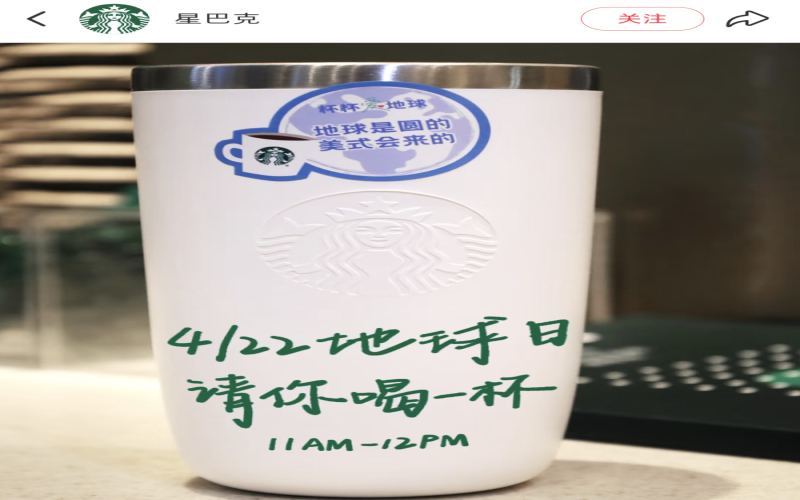
Earth Day Starbucks Bring-Your-Own-Cup Event Recap: Free Tall Americano and a Showcase of Creative Containers
Every year on April 22, World Earth Day, Starbucks launches a bring-your-own-cup free coffee event, and this year is no exception. During the designated time slot, bring a non-disposable container to the store and you can get a free medium Americano; the first 30 people can even upgrade to a Berry Berry flavored Americano. Although the size is limited to medium, there are no restrictions on the type of container, so this event has gradually evolved into an annual "BYOC Cup Showcase" for coffee lovers. From buckets and milk bottles to pickle jars and gourds, all kinds of wildly imaginative containers make their appearance, with office workers quietly taking advantage of the freebie and attention-seekers using the opportunity to show off their cups. This article takes you through the highlights of this year's event to see which containers left the deepest impression. [more…]
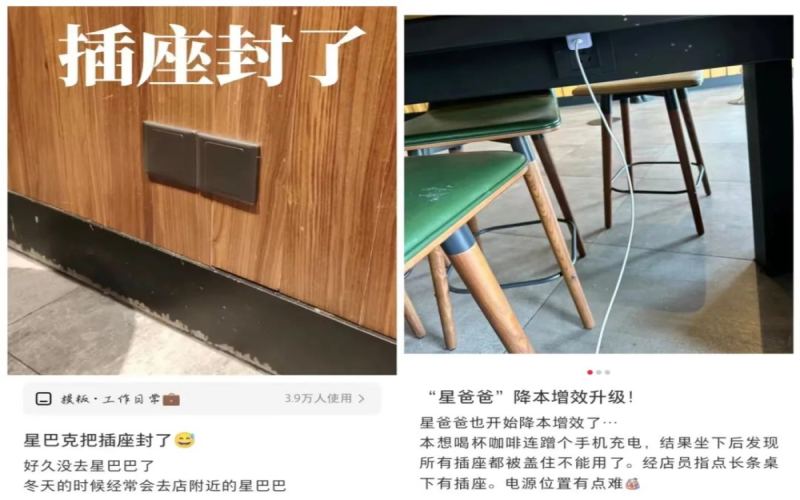
Starbucks stores sealing off power outlets sparks debate: the dilemma between third-place experience and resource occupation
Recently, customers in many places have noticed that some power outlets in Starbucks stores have been sealed off, sparking widespread discussion. As a chain brand positioned around the "third place," Starbucks has long attracted office workers, students, and other consumers who linger for extended periods, and amenities such as power outlets and Wi-Fi are among the reasons for its popularity. However, the behavior of some people who occupy seats and charge their devices without making a purchase has forced stores to take countermeasures such as sealing off outlets and requiring a purchase to be seated. Is this move a helpless step to cut costs and improve efficiency, or does it harm the experience of genuine customers? This article synthesizes multiple viewpoints to explore the balance between the operational dilemmas behind Starbucks' outlet closures and consumer rights. [more…]